
Play with Purpose: Fun Activities to Help Your Child Learn and Grow in Their Early Years!

Activities to Help Your Child Learn – The early years of a child’s life are an exciting time of discovery and growth. As parents, it can sometimes be challenging to know which activities will entertain and stimulate development. Engaging your child in the right kinds of play helps them develop essential skills, from motor functions to language and emotional intelligence. With so many options, it’s important to choose activities that foster learning while keeping things fun. Whether you’re using traditional toys for toddlers or opting for montessori toys, here’s how to make playtime both educational and enjoyable.
Activities to Help Your Child Learn
Understanding Developmental Milestones
Before diving into specific activities, it’s useful to have a basic understanding of your child’s developmental stages. Children develop at their own pace, but generally, they pass through similar stages during early years. In their first two years, toddlers work on fine and gross motor skills, sensory exploration, and early language development. By the time they’re three to five, children begin to engage in more complex social interactions, creative thinking, and problem-solving activities.
Engaging your child with age-appropriate activities will nurture these areas and give them the opportunity to explore the world in ways that encourage natural learning.
Types of Play and Their Benefits
Sensory Play
Children learn about the world primarily through their senses, especially in their early years. Sensory play encourages exploration through touch, taste, sight, sound, and smell, helping toddlers make connections between their senses and the environment. Activities like playing with sand, water, or dough stimulate cognitive development and fine motor skills.
Montessori toys are especially effective for sensory play. Many are designed to stimulate curiosity without overwhelming the senses, such as stacking blocks, textured balls, and wooden puzzles. These toys for toddlers encourage children to touch, feel, and experiment with different textures and shapes, promoting active learning in a hands-on way.
Imaginative Play
Once children reach the age of two or three, they begin to engage in more imaginative play. Activities that allow them to create scenarios, role-play, or use their imagination help develop cognitive skills, language, and emotional intelligence. Dolls, play kitchens, and toy vehicles are excellent toys for toddlers in this stage. Montessori philosophy encourages open-ended play, which means providing toys that don’t dictate a specific use. For example, wooden blocks can be used to build houses, roads, or imaginary landscapes, giving children the freedom to let their imagination run wild.
Physical Play
Gross motor skills are essential for a child’s physical development, and play is a great way to strengthen them. Activities that encourage movement, such as running, climbing, and jumping, are important for building coordination and strength. Traditional toys for toddlers like tricycles, soft balls, or pull-along toys help children develop balance and muscle control.
Montessori toys also include options for physical development, such as balance boards or climbing frames. These toys allow children to practise coordination in a safe and structured way, supporting their physical growth while boosting confidence.
Problem-Solving Play
Problem-solving skills are crucial for a child’s cognitive development, and there are plenty of activities that can help foster this in a fun way. Simple puzzles, building blocks, and shape sorters are excellent toys for toddlers that encourage logical thinking and patience. Montessori toys often feature simple designs that promote problem-solving, allowing children to figure things out on their own without overwhelming them with too many options.
For example, a classic Montessori toy like the wooden stacking tower challenges toddlers to work out how to arrange pieces by size, developing both spatial awareness and problem-solving skills.
Creating a Balanced Play Environment
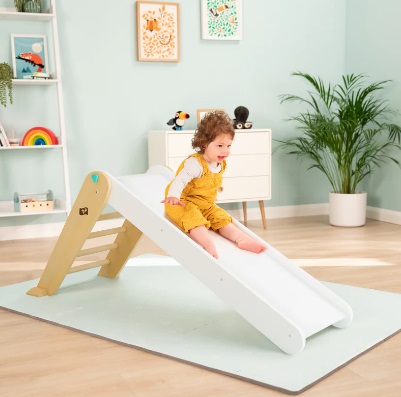
A balanced play environment is one that nurtures all areas of development: physical, emotional, cognitive, and social. While it’s important to provide a variety of toys for toddlers, focus on quality over quantity. Opt for toys that are simple, durable, and open-ended, allowing children to use their creativity and imagination.
Montessori toys are ideal for this, as they encourage independence and self-directed learning. You can supplement these with traditional toys for toddlers that offer variety and excitement. By providing a combination of both types, you can ensure your child is engaged in meaningful play that supports all areas of their growth.
The Role of Parents in Play
While it’s important to let children lead their own playtime, parents play a crucial role in guiding and supporting their child’s development. Observe your child’s interests and introduce activities that align with those passions. You can join in their play from time to time, asking questions and offering new challenges, but always allow them the freedom to explore at their own pace.
Most importantly, keep playtime fun! Whether you’re introducing Montessori toys or traditional toys for toddlers, the key is to make the experience enjoyable and stress-free. Remember that play is the primary way children learn, and by choosing activities that are both engaging and educational, you’re helping your child build a strong foundation for the future.
In conclusion, the early years are a critical period for a child’s development, and playtime should be filled with activities that help them grow and thrive. From sensory and imaginative play to physical and problem-solving activities, every moment offers a chance to learn. So, grab some toys, get creative, and enjoy the wonderful journey of learning through play with your child!


